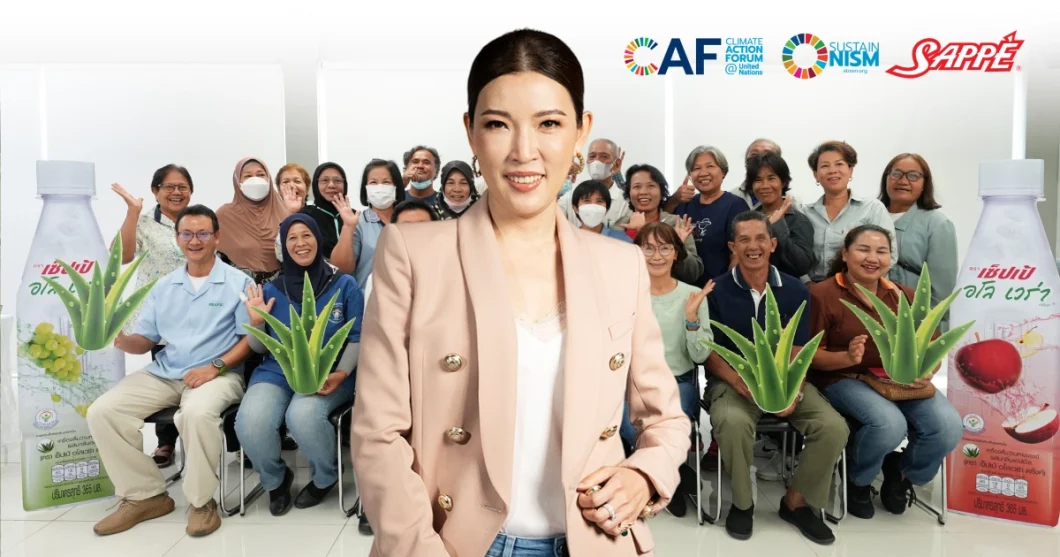
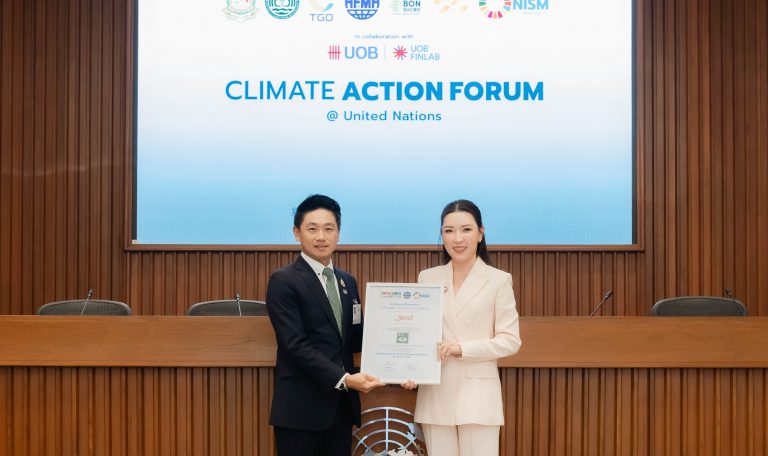
This case study highlights how community-driven social impact can accelerate climate action, and is presented through the CAF2025 (Climate Action Forum at the United Nations) platform to support regional efforts in climate resilience and sustainable development.
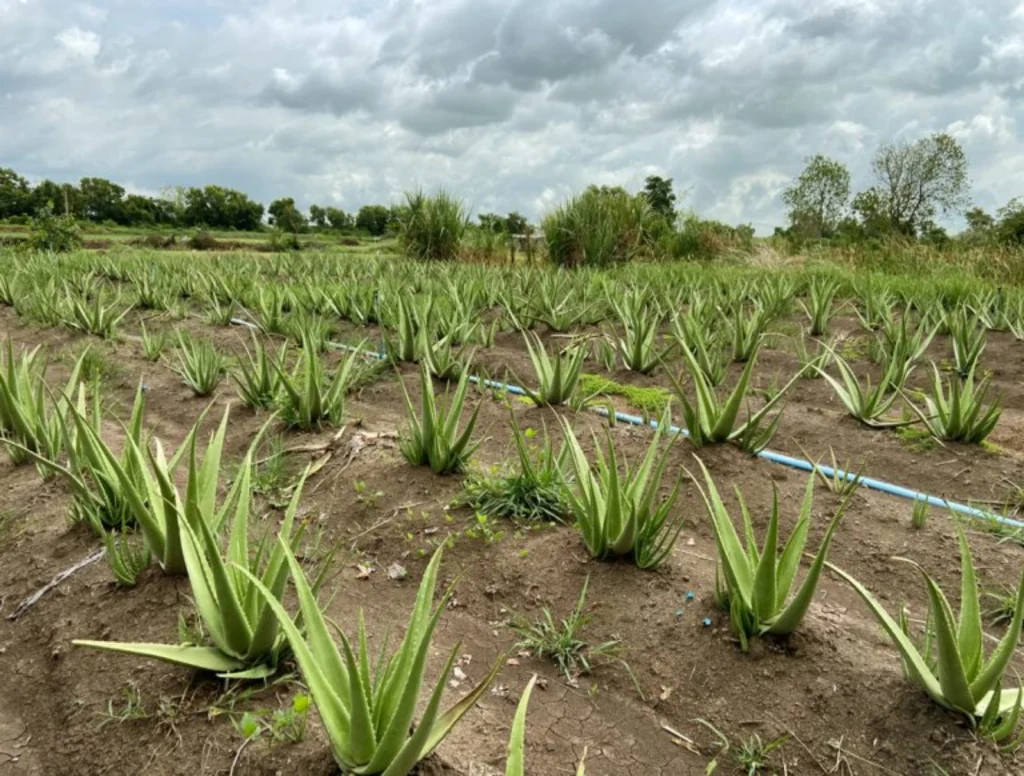
As global food and beverage companies face increasing scrutiny over resource use, emissions, and climate resilience, SAPPE demonstrates strong material alignment through the “Wan Whan Wan” project. By integrating aloe vera—a crop that also forms part of SAPPE’s ingredient sourcing—as a nature-based carbon sink, the initiative provides measurable environmental impact, absorbing 1,790 tons of CO₂ annually, equivalent to removing over 390 cars from the road. This climate-smart farming model reinforces SAPPE’s strategic response to environmental risks within its supply chain, a priority theme under the FTSE Russell Environmental materiality dimension.
SAPPE’s commitment to community-centric sustainability is reflected in its long-term engagement with smallholder farmers in Lam Luk Ka, Pathum Thani. Through free aloe vera shoots, hands-on training, and guaranteed purchase of harvests, the project has generated THB 866,000 in supplemental income over seven years. This directly supports local livelihoods, enhances agricultural skills, and allows farmers to expand into value-added products such as gel and herbal soap. These outcomes are strongly aligned with FTSE Russell’s Social materiality theme of community development, stakeholder inclusion, and socioeconomic uplift.
By integrating smallholder aloe vera farming into its sourcing model, SAPPE strengthens a responsible, transparent, and climate-resilient supply chain. The project ensures consistent income through full buy-back, supports farmers with technical training, and stabilizes raw material sourcing through sustainable agricultural practices. These elements directly address FTSE Russell’s assessment areas related to supplier working conditions, fair livelihood support, supply chain oversight, and mitigation of environmental risk, positioning SAPPE as a responsible buyer within global F&B markets.
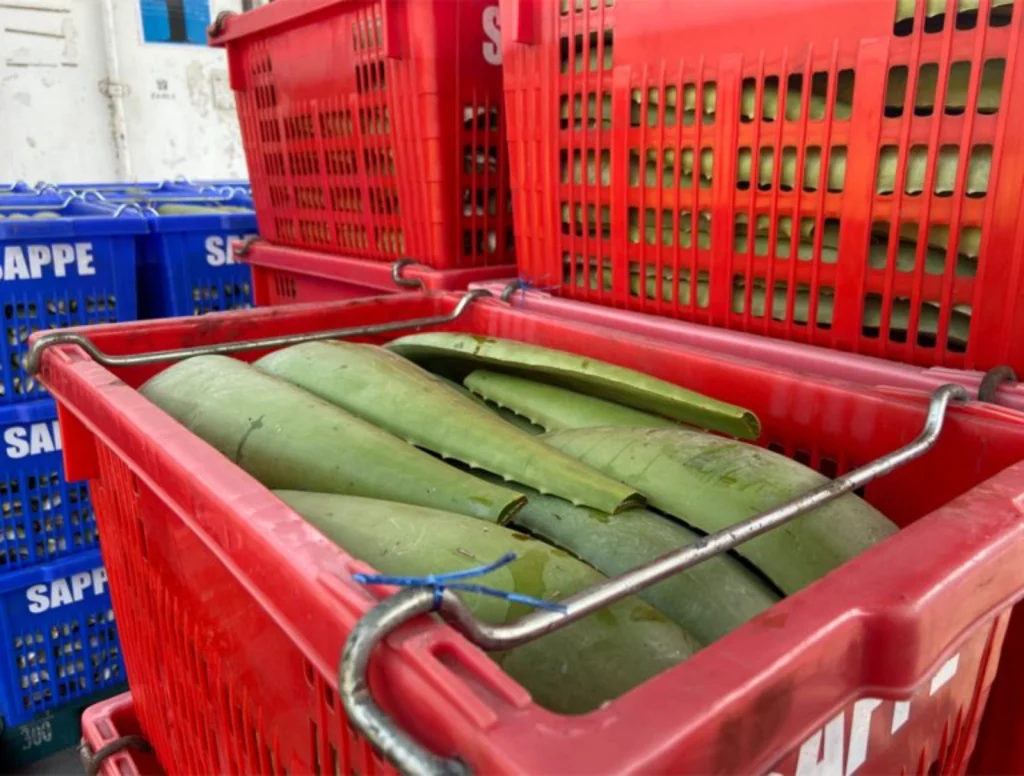
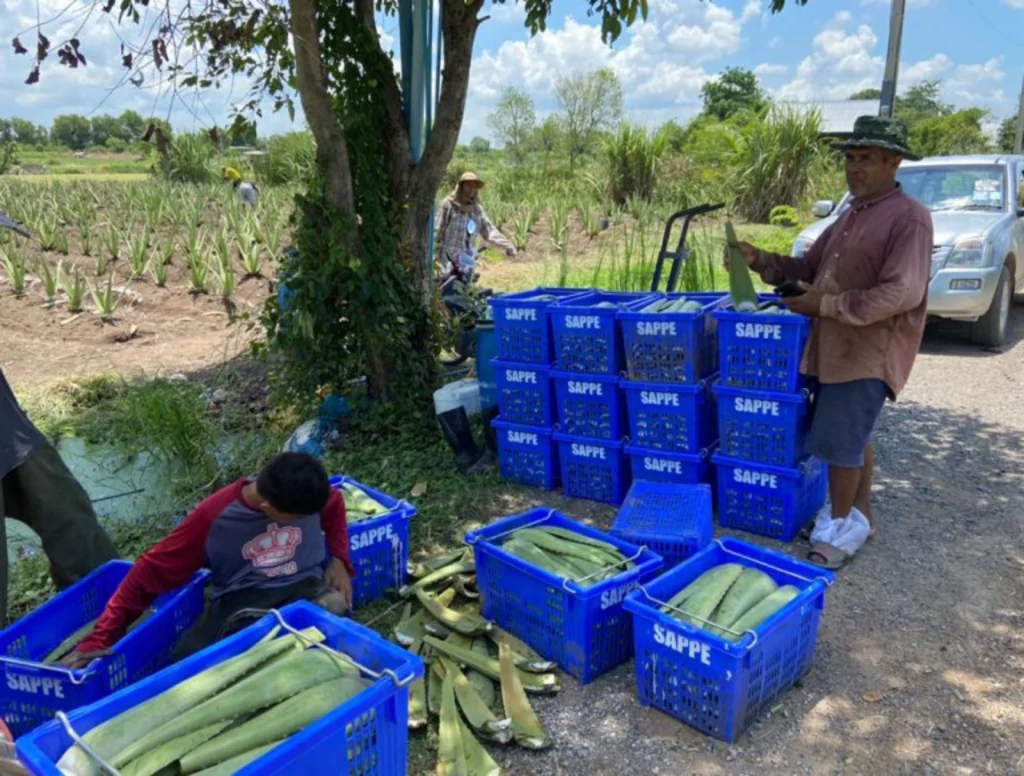
Spanning 22 rai of community farming, the initiative reinforces SAPPE’s governance approach to integrating People–Planet–Prosperity into its long-term business strategy and global brand expansion. Through collaboration with Sustainism Initiatives, SAPPE plans to present the Wan Whan Wan model at CAF2026 as an international best practice for carbon reduction, inclusive growth, and climate-resilient supply chains. This reflects strong sustainability governance—demonstrating strategic leadership, accountability, transparency, and long-term ESG commitment—enhancing SAPPE’s credibility with global investors and procurement partners.
Join us as a strategic partner of stnsm.org
and present your climate leadership at the
Climate Action Forum
United Nations Headquarters – Bangkok, Thailand
The information contained herein is based on data publicly disclosed by the company and has not been independently verified or certified by Sustainism. Accordingly, it carries no legal effect or binding recognition under any formal certification system.
Any concerns regarding inaccuracies, misrepresentation, or conduct that may constitute SDG or Greenwashing violations should be reported confidentially via: whistleblower@stnsm.org