Voluntary Disclosure Statement
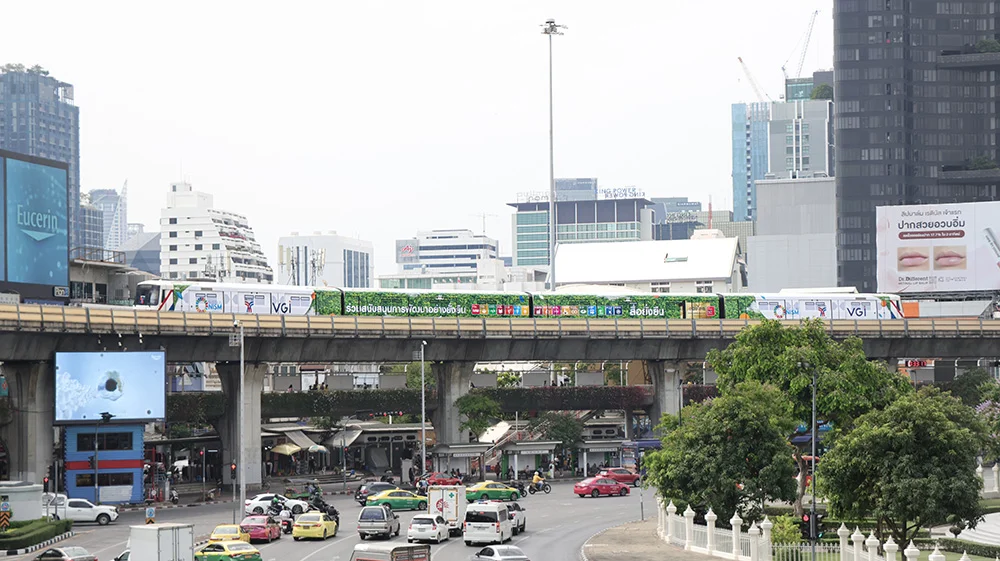
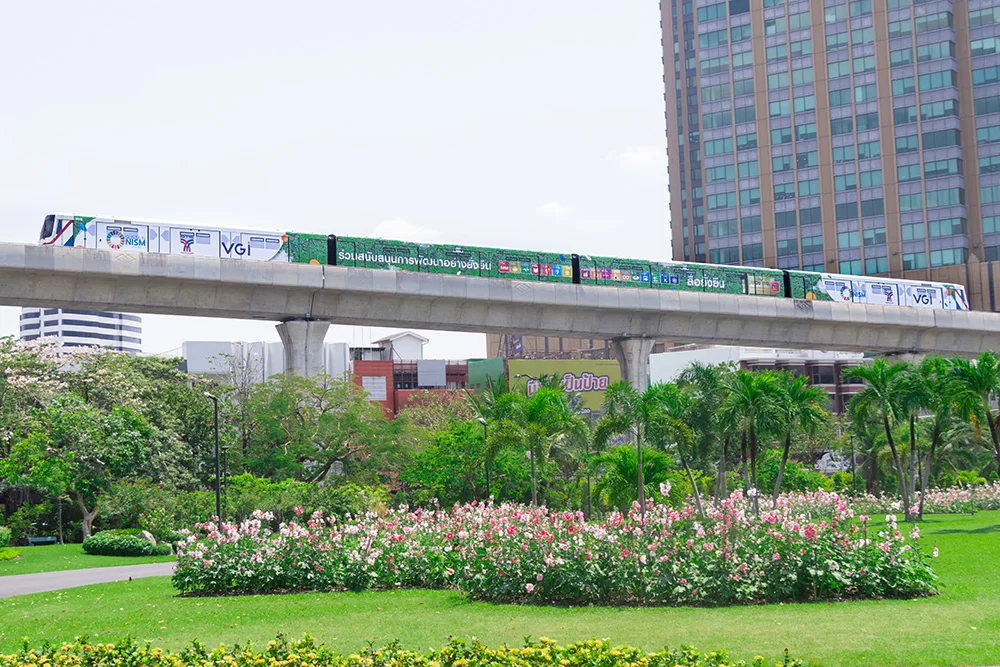
The BTS–VGI Sustrain initiative, under the concept of Urban Climate Reach Equivalent (UCRE), reflects a structural transformation in the role of media within the modern economy—from a conventional marketing tool to a strategic infrastructure contributing to climate transition at the societal level.
Historically, advertising media has primarily functioned to generate awareness in order to stimulate consumption. However, within the context of a low-carbon economy, media is evolving into a Sustainability Disclosure Infrastructure, connecting ESG information from the private sector with the awareness of consumers, investors, and the broader market.
This transformation represents not merely a shift in communication format, but a redefinition of the function of media as a core mechanism within the economic system. It enables the translation of sustainability reports—which are often static and institutional in nature—into “living awareness” embedded in daily life.
Within this context, the concept of “Reach,” traditionally a marketing metric, is elevated to “Climate Awareness at Scale,” reflecting the capacity of media systems to engage urban populations continuously and to influence awareness, recall, and behavior over time.
From an investment perspective, this initiative signals the emergence of a new asset class—namely, sustainability communication infrastructure—characterized by
- The ability to generate impact at a population scale
- Direct alignment with ESG and climate-related regulatory trends
- A role in reducing information asymmetry between corporates and markets
- The potential to create long-term value through ESG-aligned communication
Over time, such platforms are expected to become a foundational layer of the sustainable economy, supporting disclosure, consumer decision-making, and capital allocation.
The BTS–VGI Sustrain initiative should therefore be understood not merely as a communication project, but as a contribution to a disclosure-driven economy, accelerating the transition toward a low-carbon society while enhancing national competitiveness in an increasingly ESG-oriented global market.
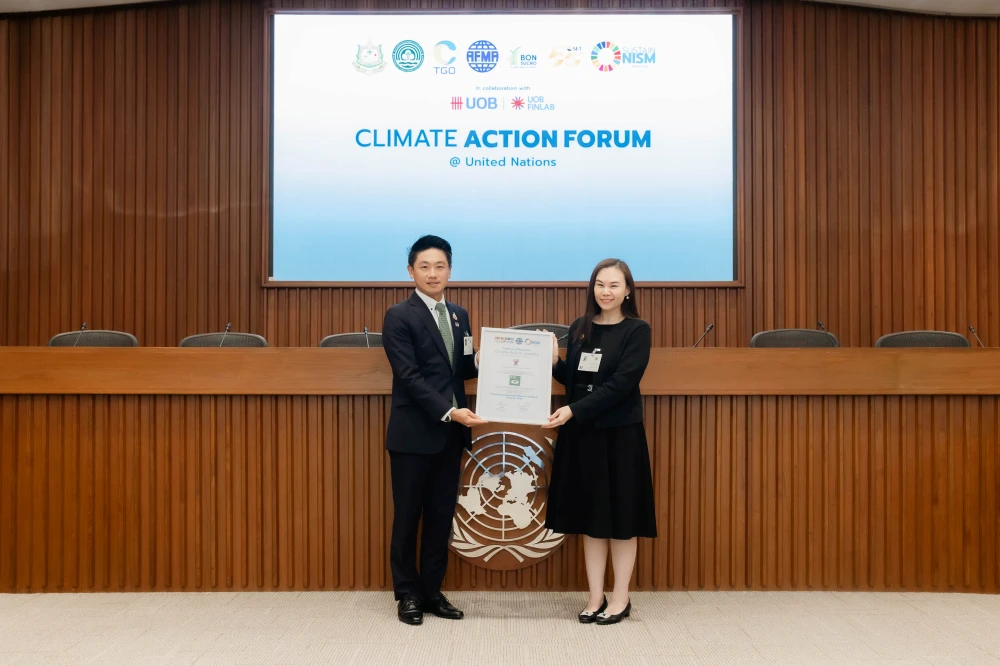
This disclosure is made on a voluntary basis to enhance transparency in sustainability communication. It is intended as a process-based disclosure and should not be interpreted as certification, accreditation, or endorsement by the United Nations or any affiliated body.
Basic Information
| Item | Description |
|---|---|
| Project Name | BTS–VGI Sustrain |
| Core Concept | Urban Climate Reach Equivalent (UCRE) |
| Project Type | Sustainability Disclosure Platform via Transit Media |
| Media Operator | VGI Public Company Limited |
| Core Infrastructure | BTS Skytrain system and associated station environments |
| Primary Objective | To enhance public awareness of sustainability and climate issues |
| Measurement Approach | Communication-based metric |
| Policy Alignment | Supports awareness under SDG 13.3 |
| Target Audience | Passengers, station users, urban population, consumers, investors, stakeholders |
| Example Campaign Duration | 150 days |
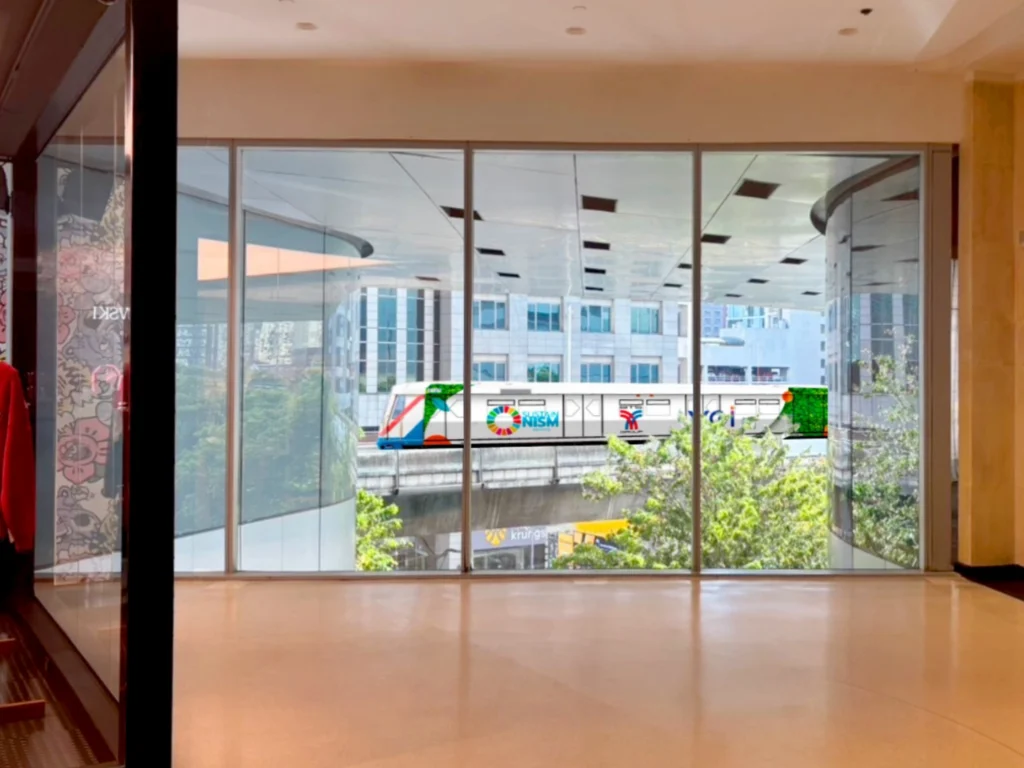
Indicative Communication Metrics
| Metric | Estimated Value |
|---|---|
| Daily BTS Ridership | ~700,000 persons |
| Daily Exposure per Train Unit | ~200,000–500,000 impressions |
| Cumulative Exposure per Train (150 days) | ~30–75 million impressions |
| Project-level Reach (multi-train / multi-location) | 100+ million impressions |
These figures reflect not only in-train exposure but also extended visibility across station areas, waiting zones, skywalks, retail spaces, and surrounding public environments, resulting in a multi-layered urban exposure effect.
Role of the Project in the Climate Economy
The BTS–VGI Sustrain initiative functions as a Climate Communication Infrastructure, linking ESG disclosures from the private sector with public awareness at the urban scale.
Its operational logic can be described as follows:
Sustainability Disclosure → Transit Media → Urban Exposure → Public Awareness → Behavioral Influence → Market Response
Through this mechanism, sustainability information—traditionally confined to reports and technical documentation—is integrated into public space, enabling repeated exposure across daily mobility patterns.
Project Role in the Climate Economy
| Dimension | Role |
|---|---|
| Disclosure Function | Extends ESG information into public communication channels |
| Awareness Function | Enhances climate awareness at the population level |
| Market Function | Converts sustainability data into market signals |
| Economic Function | Reduces information asymmetry between corporates and stakeholders |
| Strategic Function | Transforms media from an advertising channel into sustainability infrastructure |
Within the climate economy, such platforms are essential, as sustainable markets depend not only on technical decarbonization, but also on systems that ensure sustainability performance is visible, understood, and valued.
The BTS–VGI Sustrain initiative thus operates at the intersection of performance and perception, and between disclosure and capital allocation.
Sustainability Benefits for Buyers
Participation in the BTS–VGI Sustrain initiative enables organizations to extend the impact of their sustainability disclosures beyond reporting, into public visibility and stakeholder engagement.
Through this platform, sustainability disclosures can be communicated directly within public environments, ensuring that ESG information reaches broader audiences beyond institutional stakeholders.
| Benefit Dimension | Description |
|---|---|
| ESG Visibility | Enhances visibility of sustainability performance at scale |
| Climate Awareness Contribution | Supports public awareness of climate-related issues |
| Brand Credibility | Strengthens positioning as a responsible organization |
| Stakeholder Trust | Builds confidence among consumers, investors, and partners |
| Market Differentiation | Differentiates the organization in ESG-driven markets |
| Disclosure Efficiency | Translates static reports into real-world communication |
Buyer Reporting Alignment (FTSE Russell / GRI / CSRD)
The BTS–VGI Sustrain initiative supports alignment with international reporting frameworks, particularly in areas related to transparency, stakeholder engagement, and public communication.
Organizations can utilize the platform to extend sustainability disclosures beyond formal reports into large-scale public communication channels.
Indicative Alignment Table
| Framework / Standard | Alignment Area | Value Enhancement |
|---|---|---|
| FTSE Russell ESG | Governance / Social | Enhances ESG transparency and communication |
| GRI 2 | General Disclosures | Extends disclosures into public visibility |
| GRI 413 | Community Impact | Supports societal awareness and engagement |
| CSRD / ESRS S1, S4 | Stakeholder & Consumer Information | Enhances accessibility of ESG information |
| SDG 13.3 | Climate Awareness | Supports public climate education |
| SDG 12.8 | Sustainable Lifestyles | Supports informed consumer behavior |
Supporting SDG 13.3 requires not only policy alignment or reporting, but also the ability to demonstrate measurable public awareness outcomes.
Public Communication Impact
In this context, transit-based media enables organizations to communicate sustainability information at scale, characterized by
- High-volume public exposure in daily life
- Repeated exposure over time
- Communication within real-life behavioral contexts
In quantitative terms, communication can achieve:
- Hundreds of thousands of impressions per day
- Tens of millions of impressions per campaign
- Potential expansion to hundreds of millions of impressions at the project level
Such measurable outcomes reflect a transition from conceptual communication to evidence-based awareness, which is increasingly relevant for ESG credibility and investor assessment.
Remark
This disclosure is made on a voluntary basis to enhance transparency and support informed decision-making for buyers and stakeholders. If any information presented herein is suspected to constitute greenwashing or may be misleading, stakeholders are encouraged to submit verifiable evidence to: whistleblower@stnsm.org.