


STNSM.org is established as a mandated regional support mechanism to advance the implementation of the United Nations Sustainable Development Goals (SDGs) through Sustainable Consumption and Production (SCP). Operating in close coordination with AFMA and in alignment with United Nations frameworks, STNSM.org serves as an SDGs Custodian Support Mechanism, with the mandate to translate global SDGs commitments into verifiable, market-based actions across the Asia-Pacific region. Its role is to connect public policy objectives with private-sector participation by structuring systems that integrate sustainability into trade, procurement, investment, and supply-chain decision-making. Through this mandate, STNSM.org supports the United Nations by enabling measurable outcomes, enhancing transparency, reducing systemic ESG risks, and ensuring that sustainability functions as an operational component of the global economic system rather than a voluntary or symbolic undertaking.
The Sustainable Development Goals of the United Nations cannot be achieved by state authority alone, nor can they be entrusted to market forces without governance. SDG 17 was therefore designed not as a supporting goal, but as the structural backbone of the entire SDGs framework. In the UN context, partnership means the deliberate allocation of roles, authority, and accountability among governments, the private sector, and civil society within a single, verifiable system. Today’s global risks—climate change, supply chain disruption, financial instability, and social insecurity—are systemic, transboundary, and beyond the capacity of any single nation-state. SDG 17 transforms the SDGs from a policy framework into a global operating system, providing the foundation upon which institutional authority, market mechanisms, and societal participation are integrated. This principle underpins the design of STNSM.org as an international mechanism that aligns public power, market dynamics, and civic engagement into one coherent system for sustainable development.

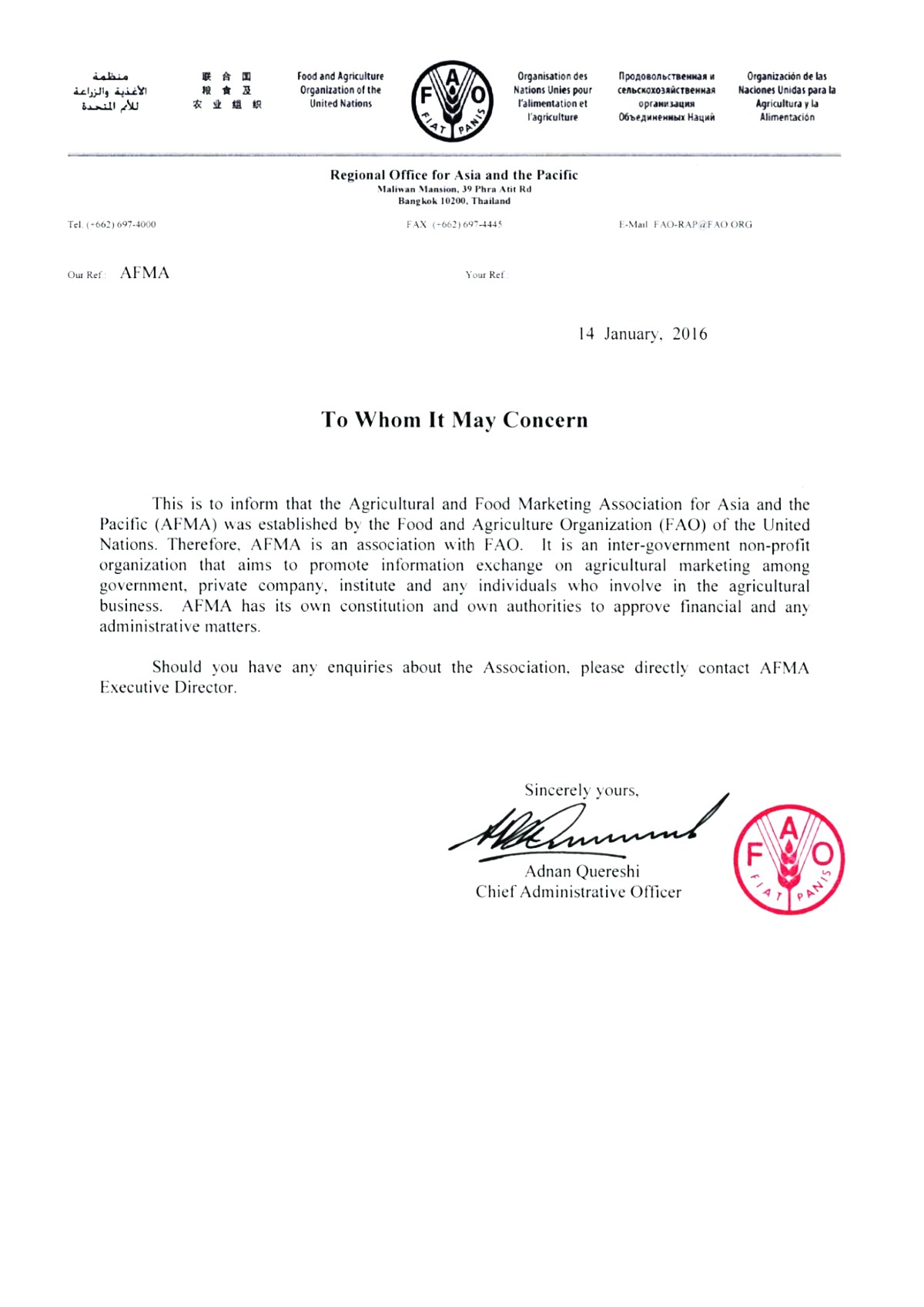
Sustainability systems fail when they focus exclusively on the supply side while neglecting demand—the decisive force that determines capital allocation, market value, and business survival. AFMA, established under UNESCAP and FAO, holds intergovernmental status to formally govern the demand side of sustainability. This is not a technical role but an economic governance function, as demand is where policy, trade, finance, and consumer behavior converge. AFMA creates systemic conditions that allow markets to respond to ESG and SDGs without coercion, using purchasing power and market preference as the primary drivers. This is why the UN requires institutions of this nature—and why AFMA is indispensable in transforming sustainability from a policy obligation into an economic mechanism.
The primary challenge in advancing the SDGs is not policy scarcity, but the absence of a functional intermediary structure through which the private sector can act meaningfully. STNSM.org was therefore designed as a system-level mechanism, not a project-based network, connecting governments, civil society, and the private sector through a sustainability-based economic architecture. STNSM.org serves as an SDGs Custodian Support Mechanism for AFMA and has appointed Pej Prapakittikun (Thailand) as Director, with independent authority over internal governance and financial management across the Asia-Pacific region. This structure addresses a core systemic question: how private-sector actors—the true stakeholders of market systems—can generate revenue, investment, and growth while remaining fully aligned with SDGs, without undermining public or social interests. This is the foundation of the sustainable economy that STNSM.org is building.


STNSM.org operates on a clear structural principle: sustainability that cannot be translated into economic outcomes cannot survive in global markets. Its mission is to place Sustainable Consumption and Production (SCP) at the core of transforming ESG and SDGs into revenue generation, competitiveness, and investment attractiveness—from firm level, to supply chains, to the broader economic system. Within the STNSM framework, SCP is not a voluntary guideline but a market rule, integrating production, consumption, trade, and finance into a single logic. Sustainability thus becomes a condition for market access in Asia-Pacific and global markets, not an added business cost but a determinant of competitiveness in the modern global economy.
To prevent SDGs–ESG washing, STNSM has established a supply-chain risk classification mechanism, identifying entities under Black List, Red List, and Green List categories, aligned with UN governance principles, transparency, and traceability. Information is accessible to STNSM partner buyers and investors upon request to support procurement, investment, and risk management decisions. This mechanism converts sustainability from reputational claims into a direct economic variable affecting revenue, market access, and capital flows. Verified violations may be reported with supporting evidence to whistleblower@stnsm.org for due process under STNSM governance.
CSCAP is not a forum for policy statements; it is an international SCP-based platform where verified outcomes serve as the common language among governments, private sector leaders, and civil society. CSCAP enables direct engagement with heads of government, policy authorities, standard-setting bodies, major buyers, and institutional investors to negotiate sustainable trade agreements, mutual recognition of standards, and sustainable procurement frameworks across borders. This alignment ensures that ESG implementation is not fragmented by market-specific interpretations, but anchored to SDGs-consistent acceptance frameworks.
A core function of CSCAP is the structural reduction of sustainability costs, particularly the duplication of standards and audits imposed by multiple buyers on the same supplier. Through standard alignment and mutual recognition, CSCAP enables businesses to “do sustainability once, and access multiple markets,” turning ESG into a driver of efficiency, cost reduction, revenue growth, and investment attraction—fully aligned with global trade and financial systems.


During the transition toward sustainable economies, the primary challenge is not the absence of ESG goals, but the reality that sustainable trade remains difficult, costly, and risky. SSA under STNSM.org is therefore designed as a transition mechanism, not a certification label. It reduces market friction during periods when standards and demand are still evolving, allowing sustainable trade to begin, continue, and scale without premature failure.
SSA assigns value to buyers who commit to sustainable procurement. STNSM records buyer identities, procurement activities, and verified outcomes within its disclosure system, benefiting buyers through enhanced credibility, investor confidence, and capital access. Simultaneously, sellers gain market visibility by publicly demonstrating participation in the sustainability system, providing buyers with confidence that procurement decisions are evidence-based and protected against SDGs–ESG washing. SSA is not a judgment tool, but a learning mechanism that enables buyers to buy, sellers to disclose, and markets to mature in alignment with UN principles.
In the UN system, reporting is not communication—it is governance infrastructure. What is not recorded cannot be assessed, compared, or used to guide policy, trade, or investment decisions. CSCAP Publication functions as an official record of sustainability outcomes, with STNSM.org acting as an SDGs Custodian Support Mechanism by collecting, verifying, structuring, and translating real-world actions into SDGs-aligned evidence.
CSCAP Publication records buyer identities, sustainable procurement activities, verified outcomes, and identified supply-chain risks. This information may be referenced by buyers, investors, and international institutions upon request. Through this mechanism, SDGs are directly linked to market decisions, capital allocation, and procurement systems—ensuring that sustainability operates as an economic, trade, and investment mechanism, not merely an aspirational framework.

The United Nations holds global legitimacy in defining the direction of development, trade, and sustainability. SCP is the system-level engine recognized by the UN for integrating production, consumption, trade, finance, and public policy into a unified framework. STNSM.org places SCP at the center of SDGs implementation, transforming sustainability from a perceived burden into the structural foundation of the modern global economy, shaping competitiveness, market access, and capital flows.
Within this framework, STNSM.org serves as a regional support mechanism for the UN, translating global SDGs into actionable systems across the Asia-Pacific through cooperation with AFMA and the CSCAP mechanism. These are not short-term projects, but permanent structures linking the UN with governments, markets, and the private sector. Working with STNSM.org therefore means more than joining a sustainability initiative—it means standing as a global partner, sharing responsibility for the future of the world economy and contributing directly to the realization of the SDGs at scale.
If you wish to become a partner with us, please contact the Secretariat at:
secretariat@stnsm.org