Between the Ministry of Commerce of the Kingdom of Thailand
and Sustainism (STNSM)
on Advancing Sustainable Trade in the Asia-Pacific Region
Overview
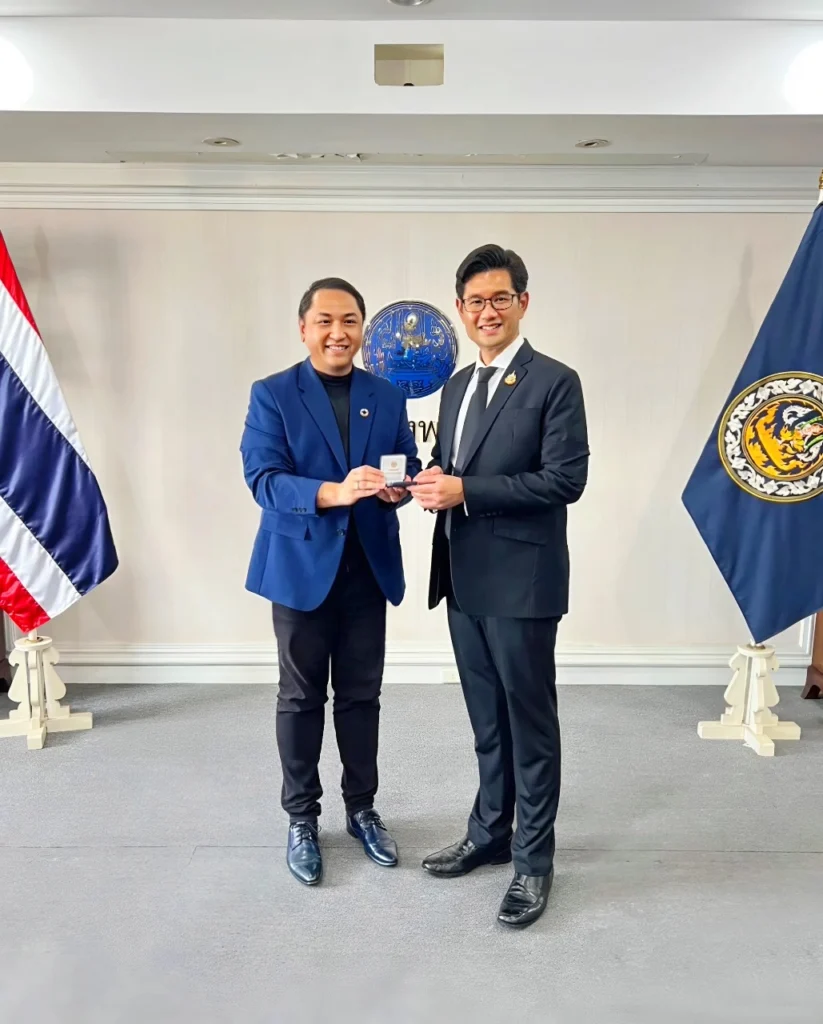
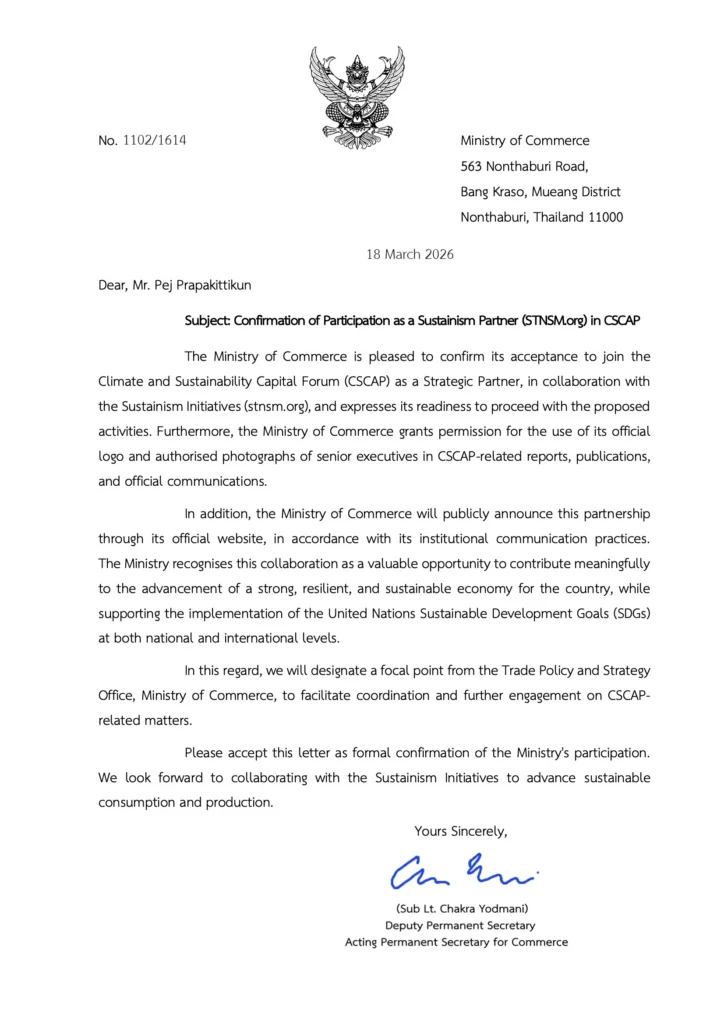
The Ministry of Commerce of the Kingdom of Thailand and Sustainism (STNSM) jointly announce a policy partnership to advance Sustainable Trade as a core component of economic development across the Asia-Pacific region.
This collaboration reflects Thailand’s policy commitment to strengthening trade systems beyond conventional considerations of price and volume, towards a framework that prioritizes transparency, accountability, and traceability across supply chains.
Under the framework of the Climate and Sustainability Capital Forum (CSCAP), the partnership seeks to reinforce the integration of trade, procurement, and finance in support of Sustainable Consumption and Production (SCP) and the United Nations Sustainable Development Goals (SDGs).
Key Mechanisms of Cooperation
The partnership will focus on the following core mechanisms:
1. Strengthening Knowledge and Capacity on SCP
Providing knowledge, strategic orientation, and capacity-building on Sustainable Consumption and Production (SCP) to strengthen Thailand’s sustainable trade ecosystem and support enterprise readiness for evolving regional and global market expectations.
2. Connecting Thai Enterprises with Regional Sustainable Buyers
Facilitating linkages between Thai enterprises and regional sustainable buyers through structured SS Initiatives, helping translate sustainability efforts into greater market visibility, buyer relevance, and commercial opportunity.
3. Leveraging CSCAP as a Regional Platform
Utilizing CSCAP as a platform to connect enterprises, buyers, and investors across the Asia-Pacific region, thereby strengthening regional networks for sustainable trade, market access, and long-term economic cooperation.
Strategic Relevance for Thai Enterprises
For Thai enterprises, particularly small and medium-sized enterprises (SMEs), the ability to participate in markets that increasingly value ESG alignment, supply chain transparency, and sustainability disclosure is becoming more important. In this context, access to knowledge, regional buyer linkages, and credible market platforms can contribute to improved competitiveness and stronger market positioning.
The partnership therefore aims to help create enabling conditions through which Thai enterprises may become more visible, more trusted, and more aligned with the direction of international trade.
Regional Significance
At the regional level, this partnership contributes to broader efforts to advance sustainable trade as part of a more resilient, transparent, and future-oriented economic architecture in the Asia-Pacific region. By linking trade, procurement, and finance with practical sustainability mechanisms, the collaboration seeks to support more responsible market systems and stronger regional cooperation.
Policy Signal
The ability to provide structured sustainability-related information and demonstrate supply chain transparency is increasingly becoming a foundational condition for market participation.
This partnership aims to strengthen the competitiveness of Thai enterprises, mitigate ESG-related risks in trade systems, and support the positioning of Thailand as a:
“Regional Hub for Sustainable Trade.”
Disclaimer
This partnership constitutes a voluntary, facilitative policy collaboration. It does not represent certification, regulatory approval, or endorsement of any entity, product, service, or outcome. References to United Nations frameworks are provided solely for alignment purposes and do not imply endorsement by the United Nations.
Issued by
Sustainism Initiative (STNSM)
SDG Custodian Support Mechanism under AFMA (FAO–UN ESCAP Intergovernmental Framework)
Contact at Sustainism Secretariat
Sustainism Initiatives
Ms. Kaninchita Wonganawat
Assistant Director of the Secretariat
+66 8298 96869
secretariat@stnsm.org