Formally presented on 27 October 2025 at the CSCAP platform, in a United Nations context, positioning Sustainism as an SDG Custodian Support Mechanism under the auspices of the Agricultural and Food Marketing Association for Asia and the Pacific.
Strategic Declaration
Sustainism proposes the development of a “Sustainability Market Mechanism” as a system-level infrastructure to enable Sustainable Consumption and Production (SCP) to function effectively within the real economy.
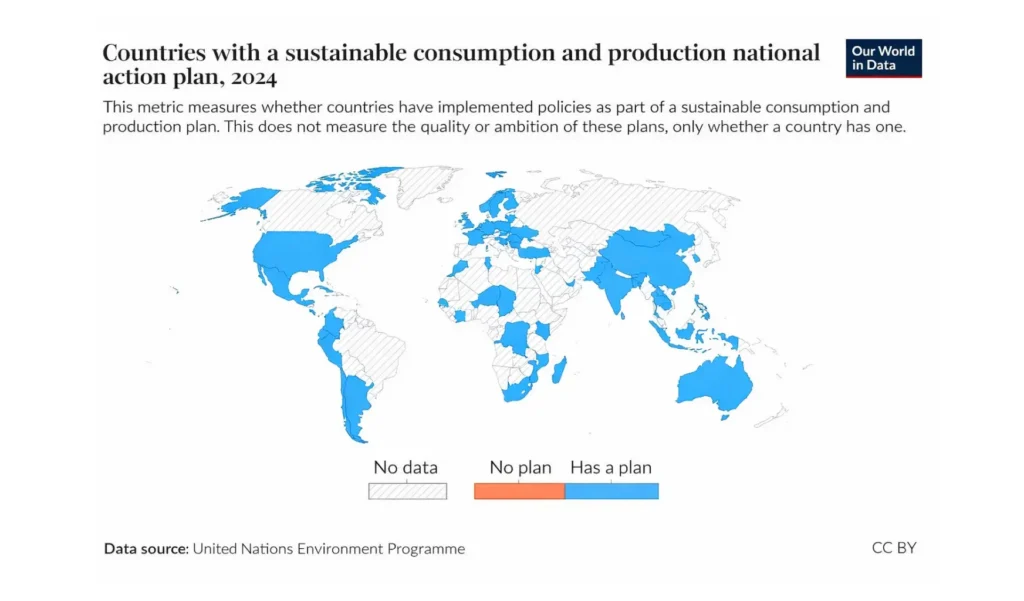
This approach is not designed as a standalone project or a certification system, but as a market infrastructure that connects production, procurement, distribution, and consumption through structured data, incentives, and responsible disclosure.
Its objective is to transform sustainability from a policy-oriented concept into a market condition that directly influences revenue, risk, and economic decision-making.
The implementation is carried out through a set of SS (Sustainism SCP Market Infrastructure) Initiatives, which function as interconnected mechanisms within a unified system, enabling the transition from fragmented initiatives to an integrated sustainability economy.
These initiatives are designed as a system architecture with defined functional roles and continuous interlinkages, ensuring that outputs from each mechanism are transmitted across the system.
The SS Initiatives comprise
- SSA (Supply): disclosure and structuring of sustainability data from producers
- SSB (Demand): integration of such data into procurement decision-making
- SSC (Consumption): translation of system-level data into consumer decision-making
- SSD (Distribution): linkage of sustainability to market access and distribution channels
Together, these mechanisms operate as an integrated sustainability economic system, characterized by forward data flows across the value chain and reverse incentive flows from the market to producers.
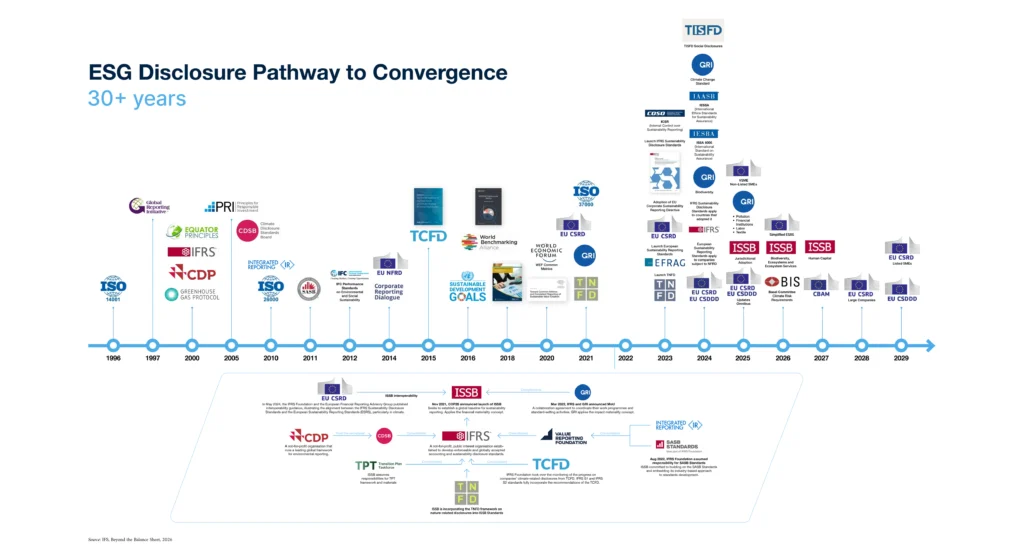
This structure is designed to establish a structural linkage with the Sustainable Stock Exchanges Initiative (SSE) of the United Nations, as a capital market framework promoting corporate transparency, ESG disclosure, and sustainable investment.
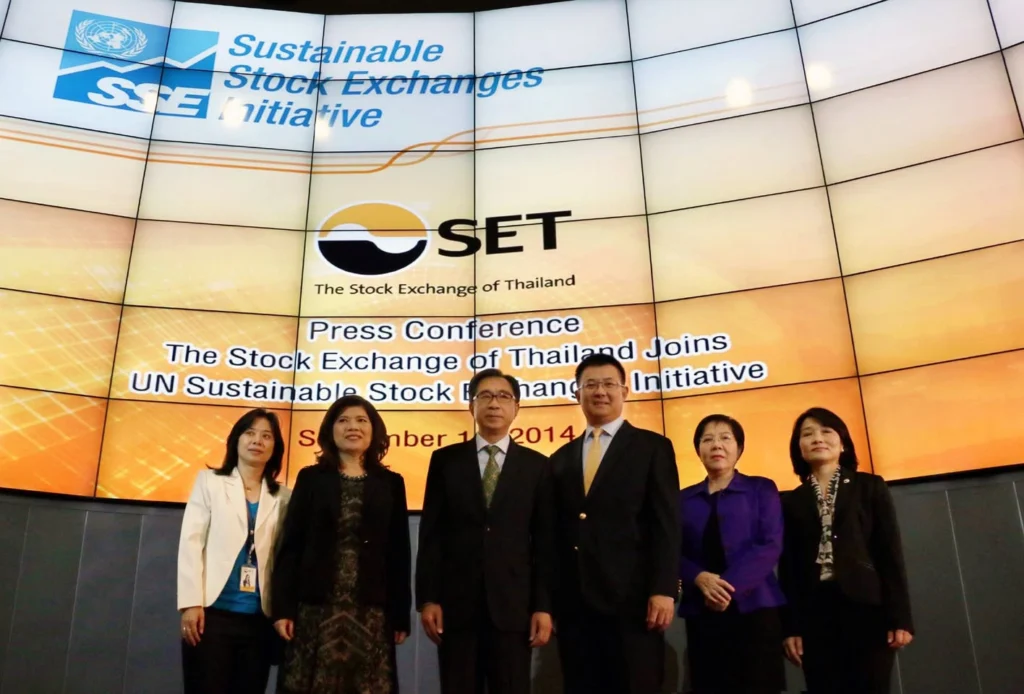
In this context, SS Initiatives are not equivalent to, nor affiliated with, SSE. Rather, they function as upstream mechanisms within the real economy, enabling sustainability data across supply chains, procurement, distribution, and consumption to be sufficiently structured to align with capital market logic over time.
Accordingly, SS Initiatives may be understood as pre-capital-market infrastructure within the real economy, establishing data foundations, shaping market behavior, and strengthening credibility in ways that support the same direction as SSE—namely, enhancing transparency and enabling informed investment decision-making.
Under this logic, SSA, SSB, SSD, and SSC do not converge into SSE in an institutional sense, but can connect with its objectives at a systemic level.
As data quality improves, as buyers increasingly utilize such data, as market channels prioritize transparency, and as consumers respond accordingly, the real economy provides a stronger foundation for companies and capital markets to enhance disclosure quality and investment decisions.
The relationship is therefore complementary: SS Initiatives function as market-based mechanisms within real-economy value chains, while SSE operates as a cooperative framework at the capital market level.
Both systems can be structurally aligned through shared objectives of transparency, sustainability, and the strengthening of economic signals, without conflating their respective roles.
Transition Risk
The global economy is entering a transition phase in which sustainability is shifting from a voluntary concept to a structural expectation of the market. This trajectory is aligned with the Sustainable Development Goals (SDGs) and policy guidance from the United Nations Environment Programme (UNEP) and the Intergovernmental Panel on Climate Change (IPCC), both of which emphasize the need for systemic transformation across production, consumption, and market structures.
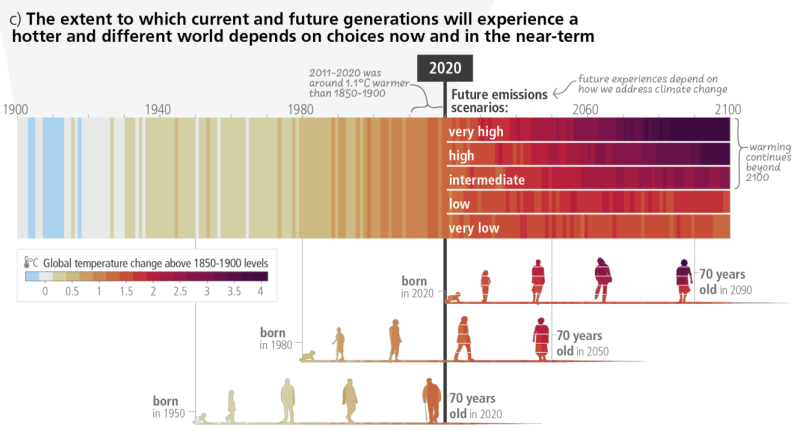
The IPCC Sixth Assessment Report (AR6) highlights that climate targets cannot be achieved through incremental improvements alone, but require structural transformation at the level of the economic system. In parallel, UNEP has identified that current patterns of production and consumption remain misaligned with planetary boundaries, and that market-based mechanisms are necessary to accelerate the transition.
However, from a private sector perspective, sustainability during this transition is frequently perceived as economically unviable. It is often viewed as a cost burden, characterized by unclear standards and lacking reliable market returns. This perception is not merely a limitation of awareness, but constitutes a systemic warning signal that existing market mechanisms are not yet capable of translating sustainability into economic incentives.
From a policy perspective, this perceived “impossibility” within the private sector represents a critical risk indicator. If businesses are unable to connect sustainability with revenue generation, market access, or risk reduction, the transition will not occur at the scale required. Consequently, the achievement of the SDGs—particularly SDG 12 and SDG 13—faces a significant risk of delay beyond the 2030 timeframe.
In this context, the transition phase represents a critical window of systemic risk, during which the direction of the economic system is being determined. In the absence of appropriate mechanisms, sustainability risks being reduced to fragmented reporting obligations, inconsistent communication, cost structures without economic return, and unverifiable claims—ultimately undermining market confidence over time.
Conversely, where a Sustainability Market Mechanism is in place—one that structures data, links it to decision-making, and generates economic incentives—the perceived “impossibility” can be transformed into market feasibility, enabling the transition to occur at a systemic level.
Accordingly, this transition phase should not be understood as a routine shift, but as a structural battlefield of the global economic system—one that will determine whether sustainability evolves into a functional economic system or deteriorates into fragmented compliance and greenwashing, with long-term consequences for both business and society.
Core Definition
SCP Market Infrastructure may be academically defined as a system of institutional mechanisms, economic coordination structures, and data flows that enable sustainability-related information to be systematically generated, disclosed, transmitted, and utilized across economic value chains.
Within the context of global policy frameworks, this concept is aligned with the direction of SDG 12 (Sustainable Consumption and Production) and SDG 13 (Climate Action), with SCP Market Infrastructure functioning as a bridging mechanism between policy intent and market behavior.

For such a system to be trusted by markets, buyers, and investors—an essential condition for real-world functionality—it must demonstrate a set of core functional properties. These properties must collectively explain, at a systemic level, why sustainability data can be considered credible, usable, and economically meaningful, as outlined below:
(1) Visibility
The system must ensure that sustainability information is transparently disclosed, traceable to its source, and broadly accessible. This reduces information asymmetry, which is a fundamental source of mistrust in markets. When data is disclosed in a structured manner, buyers and investors are able to observe meaningful differences in performance across entities, thereby reducing decision-making risks associated with incomplete or opaque information.
(2) Comparability
Information must be presented in a form that allows for structured comparability, even in the absence of fully standardized metrics. This enables buyers to evaluate suppliers and investors to assess risks and opportunities on a consistent basis, reducing ambiguity in sustainability claims and strengthening market discipline.
(3) Usability
Information must be decision-useful and embedded within actual operational workflows, including procurement processes, supplier selection, market placement, and investor risk-return assessment. Without integration into these decision-making processes, data cannot generate behavioral trust or influence market outcomes.
(4) Economic Relevance
Information must be clearly linked to economic variables such as revenue, cost, risk, compliance, and market access. This ensures that buyers and investors recognize that the use of such data has direct implications for real economic outcomes, rather than serving merely as a reputational or reporting function.
Structural Rationale for Market Trust
Trust among markets, buyers, and investors does not arise solely from declarations or certification, but from structural conditions that ensure the credibility of information by design. These include:
- Evidence Linkage
All disclosures must be supported by verifiable evidence (e.g., documentation, datasets, traceability records), increasing the cost of false claims and reducing incentives for greenwashing. - Scope Integrity
The scope of each claim must be clearly defined (e.g., product/service, time period, segment of the supply chain), preventing overgeneralization and enabling precise interpretation. - Process-based Recognition
Recognition is based on participation in disclosure and process transparency, rather than guaranteed outcomes. This ensures that market signals reflect readiness and transparency, rather than overpromised performance. - Transaction Relevance
Information is directly linked to procurement and market access decisions, thereby influencing real economic outcomes such as revenue and risk. Buyers are able to make purchasing decisions with greater confidence due to reduced information risk, while suppliers benefit from demand generated through transparency. - Traceability and Data Flow
The ability to track information across upstream and downstream segments ensures continuity of data and reduces opportunities for distortion or misrepresentation. - Market Feedback Loop
Improved market access and revenue outcomes for transparent actors reinforce incentives for others to adapt, embedding trust through repeated economic validation. - Interoperability
Data structures can be mapped across ESG and reporting frameworks, enabling investors to utilize the same information across multiple contexts and reducing interpretation costs.
Within this design framework, SCP Market Infrastructure is positioned as a “Pre-Standard Mechanism.”
That is, it does not constitute a formal standard or certification, but rather serves as a pre-standard layer that enables markets to trust and utilize sustainability data prior to full standardization.
The structural roles of a Pre-Standard Mechanism include:
- Establishing scalable and structured data foundations
- Enabling the formation of market behavior that values transparency
- Reducing the gap between policy intent and practical implementation
- Providing real-world evidence to support future standard development (evidence-based standardization)
From an institutional perspective, Sustainism is positioned as a developer of market mechanisms that enable sustainability data to meet the conditions of Visibility, Comparability, Usability, and Economic Relevance, supported by credibility-by-design. This ensures that markets, buyers, and investors can trust and utilize such data from the early stages of transition.
Accordingly, the Core Definition presented here is not merely a theoretical construct, but a system-level specification that explains why markets should trust sustainability data, and under what conditions such trust can be sustained over time. This constitutes the foundational basis for transforming SCP into a functional economic mechanism.
System Architecture
The design of the System Architecture across four dimensions—SSA, SSB, SSD, and SSC—is not merely a technical division of functions, but reflects the underlying structure of stakeholders within the real economy. These include producers (supply), buyers (demand), market channels (distribution), and consumers (consumption). Each group holds distinct decision-making power and incentive structures. The absence of any one dimension would prevent the system from achieving structural transformation.
From an institutional economics perspective, the transition toward sustainability can only occur when incentives across all stakeholders are aligned. This implies that producers must have a rationale to adapt, buyers must have a rationale to select, market channels must have a rationale to support, and consumers must have a rationale to choose.
Accordingly, SSA functions to generate data and transparency on the supply side; SSB translates such data into demand-side pressure; SSD connects the data to market opportunities; and SSC enables consumer response. When all four dimensions operate in an integrated manner, they form a complete incentive loop capable of driving sustainability without relying solely on external regulatory enforcement.
In the absence of any one dimension, systemic imbalance arises. For example, data may exist without procurement, procurement may exist without market access, or products may exist without consumer demand. Under such conditions, sustainability cannot scale to a system-wide level.
For this reason, the System Architecture of SS Initiatives is designed to comprehensively cover all key stakeholders, enabling the transition toward SCP to occur as a system-wide transformation rather than as fragmented or isolated change.
Supply Layer (SSA)
Function
To convert sustainability practices of producers into structured data.
Key Components
- Producer-level data disclosure
- Information on policies, processes, and outcomes
- Evidence linkage
- Process-based recognition
Output
A structured database of sustainable producers
Demand Layer (SSB)
Function
To ensure that sustainability is actively integrated into procurement decisions.
Key Components
- Responsible procurement criteria
- Supplier screening and selection
- Recognition of buyers demonstrating sustainability leadership
Output
Demand signals directed toward producers
Distribution Layer (SSD)
Function
To connect sustainability attributes with market access.
Key Components
- Product selection for distribution channels
- Prioritization mechanisms
- Visibility enhancement within the market
Output
Improved market access and competitive positioning
Consumption Layer (SSC)
Function
To translate system-level data into consumer decision-making.
Key Components
- Accessible and user-friendly communication
- Transparency mechanisms
- Linkage to upstream data sources
Output
Consumer-driven demand for sustainable products and services
Mechanism Logic
The system is designed to operate as a feedback-driven economic loop, beginning with the disclosure of sustainability information by producers (SSA), which is structured into standardized data formats. This data is then utilized by buyers in procurement processes (SSB), transmitted to market channels that prioritize transparency in products and services (SSD), and subsequently translated into consumer decision signals (SSC). Ultimately, revenue and market opportunities flow back to producers, creating continuous and self-reinforcing economic incentives.
From an academic perspective, this mechanism can be understood as addressing key forms of market failure, particularly information asymmetry and imperfect signal transmission. By structuring sustainability data to be visible, comparable, and usable, stakeholders are enabled to make decisions based on a shared information base. As a result, markets begin to reflect sustainability quality through procurement behavior, market access, and consumer response.
At the core of this mechanism is incentive alignment across stakeholders, including producers, buyers, market channels, and consumers, without relying primarily on regulatory enforcement. Producers are incentivized to disclose and improve sustainability performance because it can be translated into revenue. Buyers are incentivized to utilize such data to reduce risk and enhance supply chain quality. Market channels are incentivized to prioritize transparent products and services, while consumers are incentivized to select options supported by credible information.
Within this framework, the “Buyer Confidence Logic” functions as a central operational driver. Buyer confidence is established when data is structured, verifiable, and directly linked to real risks. At the same time, suppliers’ ability to generate revenue depends on demand activated through the system. When buyers are willing to purchase due to reduced information risk, and suppliers are able to sell due to increased demand, sustainability transitions from a reputational concept to a functional variable within the economic system.
Beyond data mechanisms and economic incentives, the system incorporates institutional incentives to accelerate stakeholder participation. Entities that undergo verification and participate in the system are provided with structured benefits, including: (1) inclusion in a recognized sustainability registry; (2) structured disclosure of sustainability activities; (3) certification as contributors to SCP; (4) formal public disclosure through CSCAP reporting at the United Nations platform; and (5) the ability to invite buyers or investors into the system, with corresponding recognition for sustainable procurement or investment participation.
These institutional incentives complement market mechanisms by generating both credibility value and visibility value for participants. Participation therefore extends beyond ethical positioning and becomes linked to reputation, network access, and broader business opportunities, thereby accelerating system adoption during the transition phase.
From a structural perspective, the SS Initiatives are not designed solely to support producers. Rather, their primary objective is to reduce risk and enhance decision quality for buyers and investors, who serve as the primary drivers of market behavior. Buyers are able to utilize structured data to assess supply chain risks, reduce procurement uncertainty, and elevate supplier standards. Similarly, investors can use such data as a proxy for ESG risk and long-term sustainability performance.
Accordingly, SS Initiatives function as a decision infrastructure for demand-side actors, particularly buyers and investors, who require data that is credible, comparable, and economically relevant. Support for producers emerges as an indirect outcome, while the core function of the system is to strengthen the decision-making capacity of demand-side stakeholders.
Under this logic, the success of the system is not measured solely by the number of participating producers, but by the extent to which buyers and investors actively utilize the data in procurement, supplier selection, and investment decisions. This level of real-world application ultimately determines whether sustainability can become a core variable within the economic system.
Core Mechanism Components
The core of the SCP Market Infrastructure is anchored in Disclosure and Traceability as a form of trust infrastructure, enabling sustainability-related information to be effectively utilized within the market.
Disclosure Mechanism
In this context, disclosure does not refer to conventional voluntary reporting, but to a structured disclosure system designed to ensure that information meets the criteria of decision-useful data. The key components include:
- Policy Disclosure:
Disclosure of sustainability targets, ESG strategies, and organizational commitments - Process Disclosure:
Information on operational practices, supply chain management, and resource utilization - Outcome Disclosure:
Measurable results such as emissions reduction, resource efficiency, and social impact - Scope Definition:
Clear specification of the boundaries of disclosure, including the products, services, timeframes, or segments of the value chain covered
Such structured disclosure reduces information asymmetry and enables data to be utilized in procurement, market selection, and investment analysis.
Traceability Mechanism
Traceability enables disclosed information to be linked back to its source, which is a critical condition for credibility. It consists of the following elements:
- Evidence Linkage:
Connection of disclosed information to supporting evidence, such as documentation, data systems, or internal verification processes - Source Identification:
Clear identification of the origin of data, enabling accountability - Supply Chain Linkage:
The ability to extend data connectivity across upstream and downstream segments of the value chain - Temporal Traceability:
The capacity to track and compare data over time, supporting performance monitoring and trend analysis
Traceability reduces the risk of greenwashing by increasing the cost of misrepresentation and enabling buyers and investors to assess the reliability of sustainability claims.
Integration of Disclosure and Traceability
The integration of Disclosure and Traceability results in “verified transparency,” which constitutes a fundamental condition for building market trust.
- Disclosure ensures that information is visible
- Traceability ensures that information is credible
When combined, these mechanisms allow sustainability data to function as a meaningful economic signal in the decision-making processes of buyers and investors.
Institutional Incentives
To accelerate stakeholder participation, the system incorporates institutional incentives alongside Disclosure and Traceability. Participants that undergo verification and engage with the system are provided with structured benefits, including:
- Recognized Registry Inclusion
Listing within a sustainability database that functions as a market reference layer, reducing due diligence costs for buyers and investors - Structured Sustainability Activity Disclosure
Documentation and publication of sustainability activities in a structured format, transforming CSR initiatives into decision-useful data - Certificate of SCP Contribution
Recognition as a contributor to SCP, serving as an institutional signal of transparency and engagement - Formal Public Disclosure via CSCAP at the United Nations Platform
Public listing through CSCAP reporting, functioning as a mechanism of accountability and enhancing reputational incentives - Buyer/Investor Participation Recognition
The ability to invite buyers or investors into the system, with corresponding recognition for sustainable procurement or investment practices, thereby generating network effects and linking supply-side and demand-side actors
Overall, Disclosure and Traceability function as the data backbone of the system, while Institutional Incentives act as the activation mechanism, ensuring that such data is continuously utilized within market processes.
Anti-Greenwashing by Design
The system addresses greenwashing structurally through the following conditions:
- No data = No market presence
- No evidence = No recognition
- No transaction relevance = No value
From a systems perspective, the framework is designed such that the value of sustainability is realized only when it demonstrates clear core business relevance. In other words, any data or activity that cannot be linked to revenue generation, market access, or risk reduction is not prioritized within the system.
This approach is grounded in the principle that greenwashing typically emerges when sustainability is detached from core business operations and utilized primarily as a marketing narrative, without meaningful linkage to actual performance. Accordingly, the system establishes economic relevance and transaction relevance as foundational conditions for the recognition of sustainability information.
In practical terms, sustainability activities that are limited to reputational communication, short-term campaigns, or initiatives that do not reflect underlying revenue structures or supply chain dynamics do not generate status or value within the system, as they cannot be utilized in the decision-making processes of buyers or investors.
Conversely, activities that are directly linked to production processes, procurement practices, resource management, supply chain risk reduction, or improvements in economic efficiency are prioritized, as they can be translated into data that materially influences market decisions.
Accordingly, Anti-Greenwashing by Design in this context does not rely primarily on detection or enforcement mechanisms. Rather, it is achieved through the design of system conditions that remove incentives for non-core, non-economic activities, while automatically rewarding those that are aligned with revenue generation and risk management.
This approach elevates sustainability from a narrative construct to an economic variable, subject to validation through market mechanisms themselves.
Role of Business
Business serves as the primary driver of Sustainable Consumption and Production (SCP), as it directly governs core economic functions, including:
- Production
- Supply chains
- Procurement
- Market access
Within this framework, sustainability is embedded into core business operations, transforming it from a peripheral consideration into an integral component of economic activity.
Economic Transformation
From an economic perspective, sustainability can only become embedded within the economic system when the incentive structure is aligned with market behavior. Producers, buyers, and investors make decisions based on cost, return, and risk. If sustainability is not reflected within these variables, it remains an externality, excluded from economic decision-making.
In the absence of supporting market infrastructure, sustainability is typically internalized as a cost without corresponding return. This includes expenditures related to ESG reporting, process adjustments, or regulatory compliance, which do not directly generate revenue or competitive advantage. As a result, businesses—particularly small and medium-sized enterprises (SMEs)—face limited incentives to invest in sustainability, potentially leading to underinvestment in areas of significant social and environmental importance.
By contrast, when SCP Market Infrastructure enables sustainability data to be utilized in the decision-making processes of buyers and investors, sustainability is transformed into an economic signal that influences demand, price formation, and resource allocation. Producers that demonstrate transparency and credible data are more likely to gain market access, be selected by buyers, and reduce supply chain-related risks.
At the microeconomic level, this mechanism shifts sustainability from an externality to an endogenous variable within the firm’s profit function. It affects both revenue generation and cost/risk structures, including reductions in regulatory risk, supply chain uncertainty, and improvements in buyer and investor confidence.
At the macroeconomic level, the presence of effective market infrastructure enables resource allocation to better reflect sustainability value. Capital and demand are directed toward transparent and high-impact activities, while activities lacking credible data or associated with higher risk are progressively deprioritized. This dynamic constitutes a key mechanism for advancing the transition toward a sustainable economy through market forces.
Accordingly, the presence or absence of market infrastructure does not merely influence the perception of sustainability, but fundamentally alters its position within the economic system. Specifically:
- Without infrastructure: Sustainability = Cost (cost without market return)
- With infrastructure: Sustainability = Revenue driver and competitive advantage
This transformation reflects a broader shift from an externality-based economic system to an internalized sustainability economy, which is a necessary condition for achieving long-term sustainable development objectives.
Evolution Pathway
The development pathway of SCP Market Infrastructure is designed as a phased evolution, aligned with market behavior and stakeholder readiness. This progression can be articulated in four stages:
Phase 1: Voluntary Participation
At the initial stage, the system enables voluntary participation by enterprises through basic disclosure and evidence linkage. The primary objective is to establish a data foundation while minimizing barriers to entry and avoiding high compliance burdens. Participants begin to derive value through enhanced credibility and market visibility, including the creation of data profiles, transparency of activities, and the ability to be referenced by buyers.
Phase 2: Market Linkage
As sufficient data accumulates, the system begins to connect such data to concrete market decisions by buyers and distribution channels. This includes the use of data in supplier selection criteria, prioritization within distribution channels, and identification of transparent products and services on platforms. The outcome is the emergence of a tangible demand signal, with participants experiencing improvements in sales, customer access, and reduced transaction risk.
Phase 3: Market Expectation Formation
With sustained use of data by buyers and market channels, sustainability transparency gradually becomes a baseline market expectation. Enterprises lacking data or traceability begin to lose competitiveness—for example, through exclusion from buyer shortlists, reduced visibility in distribution channels, or higher perceived risk. At this stage, market pressure begins to substitute for regulatory enforcement as the primary driver of change.
Phase 4: Pathway to Standardization
As market behavior stabilizes and data utilization becomes widespread, the system can evolve toward more formalized criteria and standards. This process is informed by real-world data and operational experience, enabling evidence-based standardization. At this stage, organizations, regulators, and capital market platforms may incorporate such data into structured guidelines, requirements, and disclosure practices, while maintaining flexibility, transparency, and alignment with economic decision-making.
Overall, this Evolution Pathway reflects a transition from voluntary participation to market expectation, and ultimately to standardized structures, driven by data, incentives, and market behavior rather than top-down mandates alone.
Conclusion
This system plays a critical role in transforming sustainability into a functional economic structure, through the integration of data, incentives, and market behavior.
In the absence of a market mechanism, sustainability remains confined to the domains of policy, reporting, or stated intent, without being translated into tangible economic outcomes in terms of revenue generation, market access, or competitiveness. By contrast, when an appropriate market mechanism is in place, sustainability is elevated to an economic variable that directly influences the decision-making of buyers and investors, as well as the allocation of resources within the system.
Participation in the system generates structural value across multiple dimensions, including enhanced market visibility through data platforms utilized by buyers and investors; strengthened credibility through evidence-based information; increased opportunities for market access and revenue generation through integration with procurement processes and distribution channels; and connectivity to networks of buyers, investors, and relevant ecosystems, supporting long-term business growth.
Conversely, non-participation introduces significant structural risks. Organizations lacking structured data are unlikely to be visible within the systems used by buyers and investors for selection, resulting in the loss of opportunity at the earliest stages of decision-making. In addition, the absence of data and traceability may be interpreted as uncertainty, leading to higher perceived risk, stricter conditions, or automatic exclusion from procurement processes.
Within the demand-side role of the Agricultural and Food Marketing Association for Asia and the Pacific, buyers are increasingly likely to rely on structured data as the basis for questioning and selecting suppliers. Organizations that are unable to demonstrate sustainability data linked to actual operations may face direct scrutiny regarding their credibility, translating into risks related to market access and long-term competitiveness.
Accordingly, participation in the system should not be viewed merely as an expression of sustainability, but as entry into an emerging economic structure that will shape the direction of markets, investment flows, and organizational competitiveness in the future.
Issued by
Sustainism Initiative (STNSM)
SDG Custodian Support Mechanism under AFMA (FAO–UN ESCAP Intergovernmental Framework)